Computer Vision in Textile Quality Control: The Future of AI Fabric Inspection
The textile industry is rapidly shifting from manual inspection to AI-powered computer vision for quality control. Traditional methods are slow, inconsistent, and prone to human error, while modern systems enable real-time defect detection with high precision.
Computer vision uses artificial intelligence and machine learning to analyze fabric images, detect defects, and improve production efficiency. This technology is becoming essential for manufacturers aiming to reduce waste and ensure consistent quality.
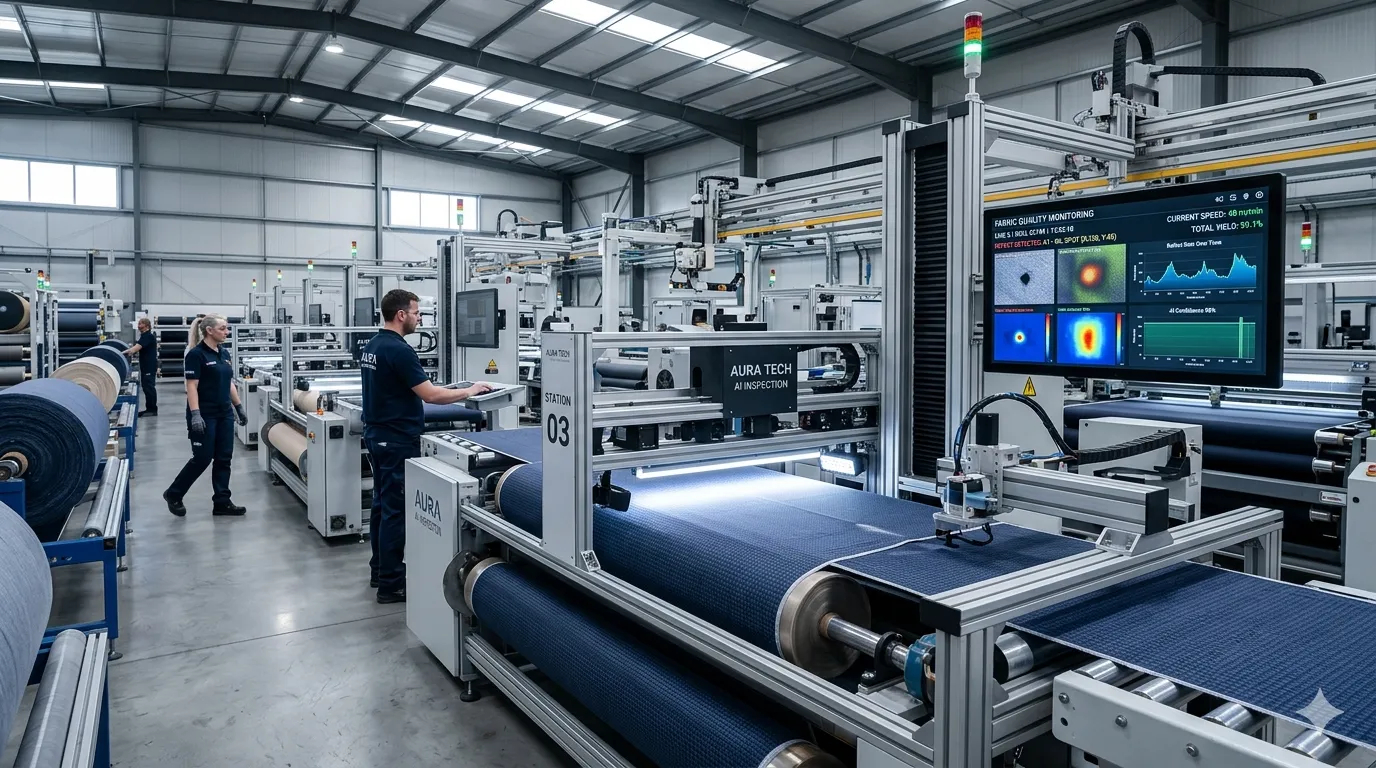
What is Computer Vision in Textile Quality Control?
Computer vision is a branch of AI that enables machines to interpret visual data. In textile manufacturing, it is used to automatically inspect fabrics during production.
- Capture fabric images using high-resolution cameras
- Process images with advanced algorithms
- Detect defects like holes, stains, and misweaves
These systems operate in real-time, allowing manufacturers to identify and fix issues instantly.
Why Manual Textile Inspection is Inefficient
- Subjective results: Quality varies between inspectors
- Human fatigue: Accuracy drops over time
- Low scalability: Cannot match high-speed production
- Missed defects: Small flaws often go unnoticed
Computer vision solves these problems by providing consistent and automated inspection.
Core Technologies Behind Textile AI Inspection
1. Image Acquisition
High-speed cameras capture continuous fabric movement.
2. Image Processing
Algorithms isolate patterns and identify irregularities.
3. Machine Learning Models
Deep learning models detect defects based on trained datasets.
4. Edge Computing
Enables real-time processing with minimal delay.
Common Textile Defects Detected
- Yarn defects (thick or thin areas)
- Holes and tears
- Oil stains and contamination
- Color inconsistencies
- Pattern misalignment
- Broken threads or floats
Benefits of Computer Vision in Textile QC
Improved Accuracy
Detects even microscopic defects.
Real-Time Inspection
Immediate feedback reduces production errors.
Cost Reduction
Minimizes waste and rework.
Higher Productivity
Keeps pace with automated textile machinery.
Data-Driven Insights
Provides analytics for process optimization.
Applications in Textile Manufacturing
Fabric Production
Ensures defect-free weaving and knitting.
Dyeing and Finishing
Detects uneven coloring and dye issues.
Garment Manufacturing
Improves final product quality before shipment.
Challenges of Implementation
- High initial setup cost
- Requirement for labeled datasets
- Integration with legacy systems
- Handling fabric variations
Despite these challenges, advancements in AI are making adoption easier and more cost-effective.
Future Trends in Textile Quality Control
Predictive Quality Control
AI systems will predict defects before they occur.
Industry 4.0 Integration
Smart factories will use connected quality systems.
Cloud-Based Monitoring
Centralized analytics across multiple production units.
Self-Learning AI Models
Systems that improve automatically over time.
Best Practices for Implementation
- Start with pilot projects
- Use high-quality datasets
- Choose scalable solutions
- Train staff effectively
- Continuously optimize models
Conclusion
Computer vision is transforming textile quality control by enabling automated, accurate, and real-time defect detection. It helps manufacturers improve efficiency, reduce costs, and maintain consistent product quality.
As AI continues to evolve, computer vision will become a core component of smart textile manufacturing.
FAQ
What is computer vision in textile QC?
It is an AI-based system that detects fabric defects using image analysis.
Is AI better than manual inspection?
Yes, it offers higher accuracy, consistency, and real-time monitoring.
What defects can be detected?
Holes, stains, yarn faults, misweaves, and color variations.
Is it expensive to implement?
Initial costs are high, but long-term savings make it cost-effective.
What is Computer Vision in Textile QC?
Computer vision in textile quality control (QC) refers to the use of artificial intelligence (AI) systems to automatically inspect fabrics and detect defects during production. Instead of relying on manual inspection, these systems use high-resolution cameras and machine learning algorithms to analyze fabric surfaces in real time.
The process begins with continuous image capture of moving fabric, followed by analysis using trained AI models. These models recognize patterns, textures, and irregularities, enabling detection of defects such as holes, stains, misweaves, and color inconsistencies. Over time, system accuracy improves as models are trained on larger datasets.
Computer vision ensures standardized inspection across production lines, eliminating subjectivity and improving consistency. Integrated with manufacturing systems, it allows instant feedback, defect marking, and automated responses such as machine adjustments.
As part of Industry 4.0, computer vision is becoming a core technology in modern textile factories, enabling smarter quality control and data-driven process optimization.
Why Manual Fabric Inspection is Failing
Manual fabric inspection has traditionally been used in textile quality control, but it struggles to meet modern production demands. Human inspection introduces variability, inconsistency, and limitations in accuracy.
Inspectors often experience fatigue due to repetitive tasks, leading to missed defects and declining attention over time. Small flaws such as minor yarn irregularities or subtle color variations are especially difficult to detect consistently.
Scalability is another major issue. High-speed textile machines produce large volumes of fabric, making it impossible for human inspectors to keep up without compromising quality. Additionally, subjective judgment leads to inconsistent defect classification.
Manual inspection also lacks data generation, preventing manufacturers from identifying root causes and improving processes. These limitations make automated AI-based inspection a necessary upgrade.
How AI Detects Fabric Defects in Real-Time
AI-powered textile inspection systems detect fabric defects in real time by combining high-speed imaging with advanced machine learning models. Cameras capture continuous images of fabric during production, which are instantly analyzed.
Deep learning models, such as convolutional neural networks (CNNs), are trained on large datasets of fabric samples. These models learn to identify patterns and detect anomalies by comparing real-time images against known standards.
When a defect is detected, the system classifies it and determines its severity. Immediate actions can be triggered, including alerts, marking defective areas, or stopping production lines.
Edge computing enables low-latency processing, ensuring fast decision-making. Over time, AI systems improve through continuous learning, making them highly accurate and efficient for textile quality control.
Types of Textile Defects Identified by Computer Vision
Computer vision systems can detect a wide range of textile defects across different production stages. These include yarn defects such as thick or thin areas, slubs, and broken threads.
Surface defects like holes, tears, oil stains, and contamination are also easily identified. These defects often result from machine faults or handling errors and can impact fabric quality significantly.
Color-related issues, including shade variations and uneven dyeing, are detected through pixel-level analysis. Pattern defects such as misalignment in printed or woven designs are also identified with high precision.
Structural defects like floats, missing yarns, and misweaves are analyzed through texture recognition, enabling early correction and improved production quality.
Benefits of Automated Textile Inspection Systems
Automated textile inspection systems provide significant advantages over manual methods. One of the key benefits is improved accuracy, as AI can detect even microscopic defects that humans may miss.
Real-time inspection enables immediate corrective action, reducing waste and preventing defective products from progressing further in production. This leads to better quality control and customer satisfaction.
Cost reduction is another major benefit. Automated systems minimize rework, returns, and material waste, resulting in long-term savings despite initial investment costs.
Additionally, these systems generate valuable data for process optimization, helping manufacturers improve efficiency, consistency, and overall productivity.
Real-World Applications in Textile Manufacturing
Computer vision is widely used across textile manufacturing processes. In fabric production, it ensures defect-free weaving and knitting through continuous monitoring.
In dyeing and finishing, it detects uneven coloring, shade variations, and surface defects. This is crucial for maintaining consistent product quality.
In garment manufacturing, computer vision systems inspect finished products for stitching errors, fabric defects, and pattern alignment issues before shipment.
Advanced applications include technical textiles and automated sorting systems, where precision and efficiency are critical for quality assurance and sustainability.
Challenges of Implementing Computer Vision in QC
Implementing computer vision in textile QC comes with several challenges. High initial investment in hardware and software can be a barrier for smaller manufacturers.
Another challenge is the need for large labeled datasets to train AI models effectively. Data collection and preparation require time and resources.
Integration with legacy systems can also be complex, requiring technical expertise and infrastructure upgrades.
Fabric variability, environmental conditions, and lack of skilled personnel further complicate implementation. However, ongoing advancements in AI are gradually reducing these barriers.
Future Trends: AI and Smart Textile Factories
The future of textile quality control lies in AI-driven smart factories. Predictive quality control systems will identify potential defects before they occur, reducing downtime and waste.
Integration with Industry 4.0 technologies will enable connected systems that share data across production lines, improving decision-making and efficiency.
Cloud-based platforms will allow centralized monitoring of multiple facilities, while self-learning AI models will continuously improve performance.
These advancements will lead to fully automated, intelligent manufacturing systems that enhance productivity, sustainability, and product quality.
How to Implement Computer Vision in Textile QC
Implementing computer vision in textile QC requires a structured approach. The first step is identifying key quality challenges and setting clear objectives.
Starting with a pilot project allows manufacturers to test the system and evaluate its effectiveness before full deployment.
Choosing the right hardware, software, and scalable solutions is essential. High-quality datasets are required to train accurate AI models.
Integration with existing systems, staff training, and continuous optimization ensure long-term success and maximum return on investment.