Global Textile AI Solutions Directory 2026: Complete Guide to Companies, Technologies, and Use Cases in Fabric Manufacturing
Explore how artificial intelligence is transforming textile manufacturing in 2026 through smart machinery, AI inspection systems, sustainable production technologies, predictive analytics, and intelligent factory automation.
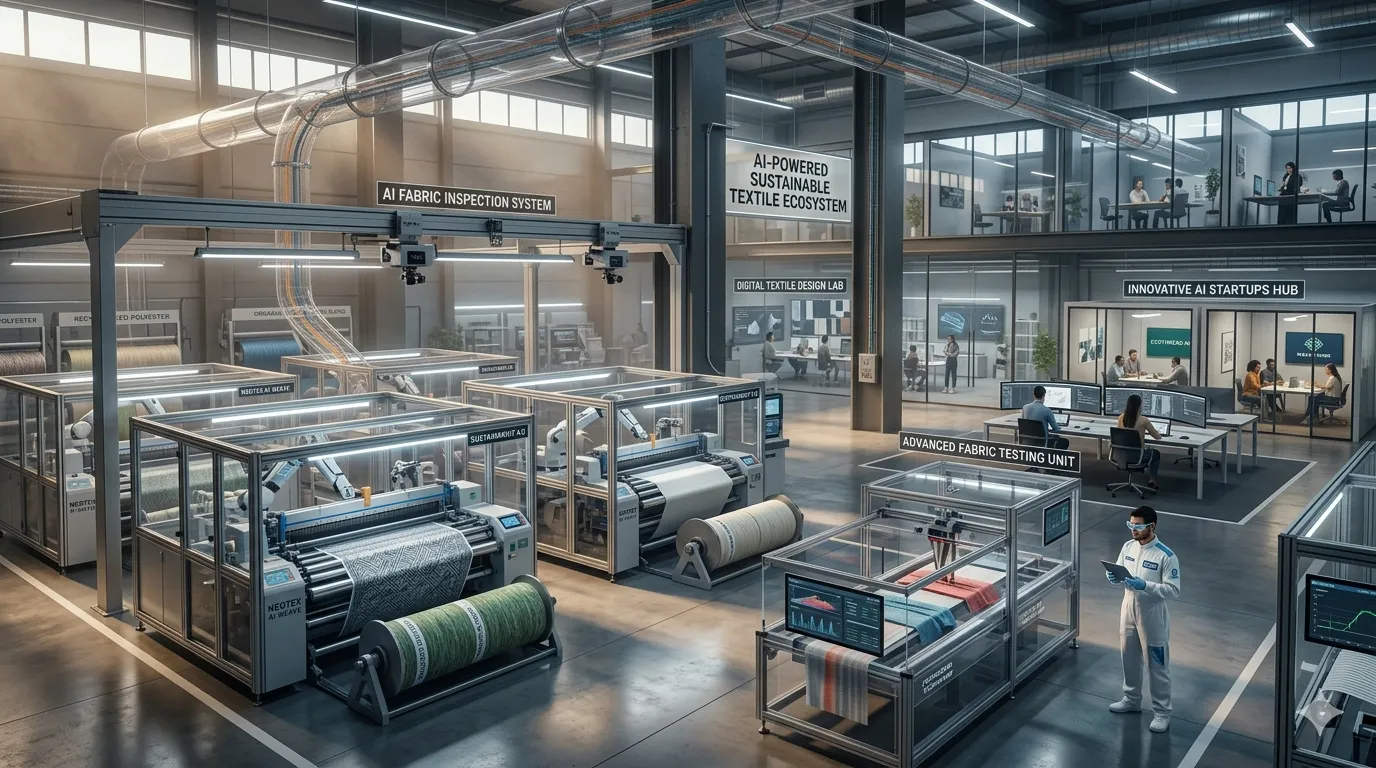
The global textile industry is going through one of the biggest technological transformations in its history. In 2026, textile manufacturing is no longer just about machines, looms, and manual labour. It is becoming a highly digital, data-driven, and AI-powered ecosystem.
From automated fabric inspection to predictive maintenance and supply chain optimization, Artificial Intelligence (AI) is now integrated into almost every stage of textile production. Manufacturers worldwide are investing in intelligent systems to improve efficiency, reduce waste, maintain consistent quality, and meet growing global demand for sustainable textiles.
This guide explores the evolving landscape of textile AI solutions, including major technologies, software platforms, smart manufacturing systems, sustainability innovations, and real-world industrial applications shaping the future of fabric manufacturing.
1. Sustainable Textile Technology and Green Manufacturing Solutions
Sustainability is one of the most important trends in textile manufacturing in 2026. Governments, global brands, and consumers are demanding environmentally responsible textile production processes, forcing manufacturers to adopt smarter and cleaner technologies.
AI-powered sustainability solutions help manufacturers reduce waste, improve recycling efficiency, optimize energy usage, and monitor carbon emissions throughout production.
Key Areas of Innovation
Artificial intelligence enables manufacturers to predict resource consumption, improve operational efficiency, and support long-term sustainability goals while maintaining competitive production output.
2. Smart Textile Machinery and Automation Providers
Smart textile machinery is transforming industrial production by integrating AI-based automation directly into weaving, knitting, dyeing, and finishing processes.
Modern textile machines can automatically adjust production parameters, detect operational faults, monitor performance in real time, and reduce the need for manual intervention.
Core Features of Smart Textile Machines
- Automated speed and tension control
- Real-time machine monitoring
- Self-adjusting production settings
- Predictive maintenance systems
Smart machinery helps textile factories improve fabric consistency, increase operational efficiency, reduce downtime, and lower overall production costs.
3. AI Software Platforms for Textile Production Management
AI-powered software platforms are becoming essential for managing complex textile production workflows, inventory systems, supply chains, and production planning.
These platforms analyse large production datasets and generate actionable insights that help manufacturers optimize operations and reduce inefficiencies.
Core Functions
Production Planning
AI scheduling systems optimize manufacturing workflows and reduce delays.
Demand Forecasting
Predictive analytics improve inventory and market planning.
Supply Chain Visibility
Real-time tracking improves logistics efficiency.
Cost Optimization
AI systems analyse production costs and improve resource allocation.
AI software enables manufacturers to make faster, data-driven decisions while improving operational efficiency and reducing production risks.
4. AI in Fabric Testing and Laboratory Quality Systems
Fabric testing is a critical stage in textile manufacturing, and Artificial Intelligence is playing a major role in transforming how quality analysis is performed. Traditional testing methods rely on manual sampling and laboratory analysis, which can be time-consuming and limited in scalability.
AI-driven systems are now automating key parts of the testing process, enabling faster, more consistent, and highly accurate evaluation of fabric properties across large production volumes.
Applications in Fabric Testing
These systems enable manufacturers to test fabric quality more efficiently, detect issues earlier, and maintain consistent standards across production batches.
Benefits
5. AI Fabric Inspection and Quality Control Systems
One of the most widely adopted applications of Artificial Intelligence in textile manufacturing is automated fabric inspection. Traditional inspection methods rely on human workers to visually identify defects such as holes, stains, mis-weaves, colour variations, and thread inconsistencies.
However, manual inspection is often slow, inconsistent, and prone to human error—especially in high-speed production environments where accuracy and speed are critical.
In 2026, AI-powered computer vision systems are becoming the standard for quality control in modern textile factories. These systems use high-resolution cameras and deep learning algorithms to analyse fabric surfaces in real time, detecting even microscopic defects with high precision and classifying them based on severity.
Key Capabilities of AI Inspection Systems
Industry Use Cases
These systems help manufacturers reduce waste, improve product quality, and maintain consistent output across production batches—resulting in higher efficiency and reliable fabric standards.
Why Companies Benefit from Being Listed Here
6. Digital Textile Design and Virtual Sampling Platforms
Digital textile design is one of the fastest-growing areas in modern textile manufacturing. Traditionally, fabric sampling required physical production, making the process both time-consuming and expensive for manufacturers and designers.
Today, AI-powered design platforms are transforming this workflow by enabling the creation of realistic virtual fabric samples. These tools reduce the need for repeated physical sampling while improving design flexibility and speed.
Features of Digital Design Systems
Benefits
These tools are especially important in the fashion and apparel industries, where speed, innovation, and design precision are critical for staying competitive in global markets.
7. Emerging AI Startups in Textile Manufacturing (2026)
Alongside established technology providers, a growing number of startups are entering the textile AI ecosystem in 2026. These companies are driving innovation by focusing on niche problem areas and developing specialized solutions for modern textile manufacturing challenges.
Many of these startups leverage advanced machine learning models, computer vision, and data analytics to deliver scalable and cost-effective solutions for manufacturers.
Key Innovation Areas
Why Startups Benefit from Industry Listings
8. Real-World Use Cases of AI in Textile Manufacturing
Artificial Intelligence is no longer a future concept in textile manufacturing—it is already actively deployed in real production environments around the world. Manufacturers are using AI to improve efficiency, reduce defects, and optimize operations across multiple stages of production.
These real-world implementations demonstrate how AI is transforming traditional textile workflows into highly automated, data-driven systems.
Practical AI Applications in Textile Industry
These applications highlight how AI is improving production accuracy, reducing operational costs, and enabling manufacturers to achieve higher efficiency and product consistency across global textile operations.
9. Key Trends in Textile AI Adoption (2026 Overview)
The textile industry is evolving at a rapid pace, and Artificial Intelligence is becoming a central force behind this transformation. In 2026, manufacturers are no longer experimenting with AI—they are actively integrating it into core production systems.
These emerging trends highlight how deeply AI is expected to reshape textile manufacturing, from factory floors to design studios and global supply chains.
Major Industry Trends
These trends clearly indicate that Artificial Intelligence will become deeply embedded in nearly every aspect of textile manufacturing, driving efficiency, sustainability, and innovation across the industry.
FAQ: Textile AI Solutions in 2026
What are AI solutions in textile manufacturing?
AI solutions in textile manufacturing include automated inspection systems, predictive maintenance tools, production optimization software, and digital textile design platforms that improve efficiency and quality across production processes.
How is AI used in the textile industry?
AI is used for quality control, demand forecasting, machine maintenance, fabric design, and supply chain management, helping manufacturers make faster and more accurate decisions.
Why is AI important for textile manufacturing?
AI improves production efficiency, reduces material waste, enhances product quality, and enables manufacturers to remain competitive in a fast-changing global textile market.
Is AI expensive for textile factories?
While initial investment in AI systems can be high, the long-term benefits include reduced operational costs, improved efficiency, and higher profitability, making it a cost-effective solution over time.